
Reimagining the Emergency Fund
Crack open any personal finance book and right there on page one, chapter one, you'll see a statement that says something along the lines of:
"It is recommended that individuals keep 3-6 months of income in an emergency fund."
Without further context or personalized advice, many people (including Dave Ramsey) preach that dual-income households must keep at least three months of their take-home income (six months for single-income households) stored safely away in a bank savings account (currently earning 0.02% annual yield), waiting for an emergency that may never occur.
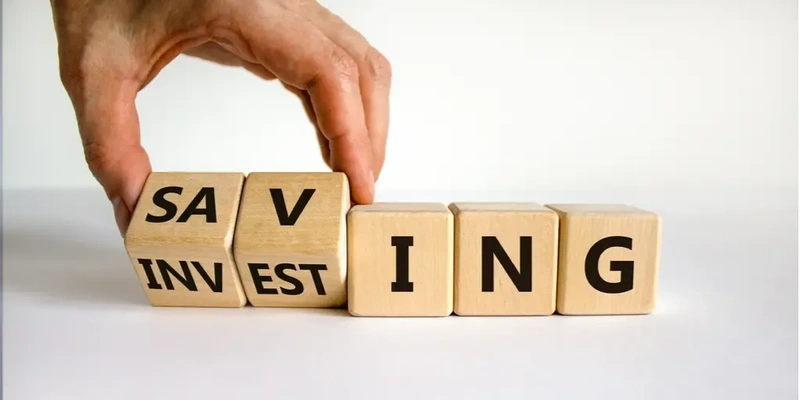
Granted, the primary purpose of an emergency fund is not to seek investment gains. Saving for emergencies and unexpected job loss are crucial to building and maintaining a strong financial base; the pandemic has certainly taught us that. However, in this interest rate environment, you should seek to implement a strategy that will at least allow you to keep up with inflation and better prioritize your savings for long-term financial success.
The 12-Step Plan
- If your employer offers a 401(k) match, take it. This guarantees you an automatic 100% return on your money.
- Pay off any high interest credit card debt. Even before establishing an emergency fund.
- Establish a small emergency fund through a Roth IRA at Vanguard, Schwab, Fidelity, or Betterment. Roth IRA contributions can always be withdrawn penalty-free.
- If you have dependents, purchase term life insurance and disability insurance.
- Max out your Health Savings Account (HSA), if eligible.
- Max out the Roth IRA established in step 3 ($6,000/year).
- Establish a taxable savings investment account as your replacement emergency fund.
- Consider purchasing your residence. FHA programs allow down payment as low as 3.5%.
- Pay off any remaining debts with interest rates over 5%.
- Increase 401(k) contributions to the annual limit ($19,500 in 2021).
- Begin saving for education through a 529 Plan if you have children.
- Add to taxable savings beyond just emergency needs.
How much do I really need to save for emergencies?
Several factors affect this: job stability, percentage of take-home pay needed for essential expenses, access to family support. Saving 3-6 months of take-home pay may look very different than keeping enough money to last you 3-6 months on a bare-bones budget.
Should I pay off my home mortgage?
In the current interest rate environment, I don't recommend it, although it may make sense to refinance to a lower rate. Send extra cash flow into long-term investments where the rate of return would outpace your low-rate mortgage.
Can't I just skip all this and trade crypto?
Anytime making money seems "too easy" warning sirens should go off in your head. Trading crypto, meme stocks, gold, or any other asset with very little proven intrinsic value is essentially involving yourself in a complex pyramid scheme.
What about rental property?
Rental property is less like an investment, and more like running your own business. Rates of return are highly dependent on your location, but historically rental property has appreciated at a similar rate to low-cost index stock funds, but without the 6% realtor fee, the leasing headache, the maintenance cost, the taxes, the insurance, and the frequent need to renovate.
If you have other questions or need help getting started, don't hesitate to reach out to amy@radixfinancial.com.